
Samsung Galaxy S26 Ultra vs. Apple iPhone 17 Pro Max — the definitive, technical showdown
by Wilson Perez
TECHKNOW
In late-February / early-March 2026 the flagship arms race took another dramatic turn. On one side stands the new Galaxy S26 Ultra — Samsung’s highest-end Android dossier of silicon, sensors, and AI features — and on the other the Apple juggernaut, the iPhone 17 Pro Max, carrying Apple’s latest A19 Pro silicon and the company’s usual tight hardware-software coupling. This is not a fanboy’s cheersheet. It’s a granular, component-level, real-world assessment: displays, imaging pipelines, SoC performance, thermal control, battery architecture and charging, software intelligence, connectivity, and the price/perf tradeoffs that determine which flagship is objectively “better” for different kinds of users.
First, naming the combatants: Samsung Electronics and Apple. I’ll use their product model names throughout.

Quick snapshot (what matters in a line)
Samsung Galaxy S26 Ultra — 6.9" LTPO Super AMOLED 2X, 3120×1440, built-in Privacy Display; Snapdragon Elite Gen 5 or Exynos depending on market; new 200 MP main sensor, upgraded periscope; ~5000 mAh battery with faster wired charging and 75% in ~30 minutes claims; heavy AI tools baked into imaging and assistant features.
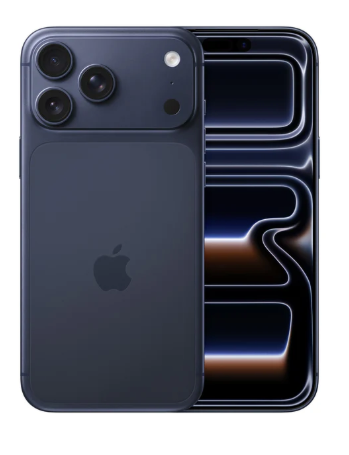
iPhone 17 Pro Max — 6.9" XDR OLED (Apple unifies panels with extreme color/brightness control), A19 Pro SoC with hardware-accelerated ray tracing and 16-core Neural Engine, all three rear cameras at 48 MP Fusion sensors (Apple’s computational imaging emphasis), top tier battery life in independent tests despite smaller nominal cell; Apple Intelligence features deep system integration.

These are both “ultimate phones” in specs and ambition. So which is better? Answer depends on which subsystems you weigh most heavily. Below, a meticulous, technical crosswalk.
Design, build, and ergonomics
Both phones target the premium hand feel. Samsung’s S26 Ultra runs a slightly thinner chassis (around 7.9 mm) at roughly 214 g for the large glass + metal build; Samsung polished the frame and trimmed bezels while retaining a large 6.9-inch footprint.
Apple’s iPhone 17 Pro Max sticks to Apple’s hard anodized aluminum unibody idiom (the Pro line often uses titanium variants in prior years but 2025–2026 optics favored aluminum uni-body cues), with precisely milled tolerances and an IP68 dust/water rating. The iPhone continues to favor a more compact software and hardware integration that often yields lighter perceived weight despite comparable physical mass. Samsung tends to give more screen — especially at max resolution — while Apple prioritizes tactile minimalism and uniform haptics.

Practical takeaway: if you want a device that screams “phablet productivity” in size, Samsung; if you want premium machining and a slightly more compact ecosystem fit, Apple.
Displays — numbers, experience, and unique bits
Samsung’s display prowess is industry-standard: 6.9-inch Super AMOLED 2X, likely 1–2k+ effective pixel density at up to 120 Hz with LTPO variable refresh, and Samsung has added a built-in Privacy Display mode that narrows viewing angles on demand — hardware + panel firmware working together.
Brightness, contrast, and motion are best-in-class on paper.

Apple’s 6.9-inch XDR (OLED) panels are calibrated for color accuracy, HDR peak brightness management, and micro-frame control. Apple’s advantage is consistency: fewer scaling modes and a software stack (Metal + iOS compositor) that wrings out color fidelity, low latency, and exceptional adaptive refresh behavior.
In practice, Samsung’s panel will offer marginally higher peak brightness and more on-screen real estate options; Apple will deliver color accuracy, temporal stability, and better power efficiency at certain refresh states. If you calibrate displays or edit video/photos professionally on the phone, both are excellent — Samsung for sheer canvas size and brightness; Apple for color predictability and pipeline stability.

Performance & thermals — silicon and real workloads
Samsung ships variants with the Snapdragon Elite Gen 5 (often marketed as Snapdragon 8 Elite Gen 5 in some outlets) and market-specific Exynos SKUs; the S26 Ultra pushes up to 16 GB LPDDR5X in high-end SKUs. Samsung emphasizes AI accelerators and sustained workloads, with claims of improved thermals over prior generations. Independent testing shows conservative thermals and good sustained throughput for multi-threaded tasks.

Apple’s A19 Pro is the wild card: Apple’s vertical integration, tightly controlled power/perf curves, and a 16-core Neural Engine yield best-in-class single-thread performance and excellent GPU throughput for Metal and real-time render workloads (including hardware accelerated ray tracing in supported apps). Apples’ approach gives strong real-world gains in app launch, AR workloads, and compute photography pipelines. Benchmarks historically show Apple retains the per-core lead; Samsung’s Snapdragon or Exynos often offers more raw multi-core throughput in burst scenarios or raw memory bandwidth when paired with higher RAM. If raw single-thread uplift and long-term app performance matter most (e.g., intense AR or pro video tools), Apple holds the edge. For multitasking, heavy browser tabs, or apps that scale across more cores and memory, Samsung can be preferable.
Cameras — hardware vs computational symphony
This is where the conversation gets heated.

Samsung — more megapixels, more light
Samsung took the obvious route: a new 200 MP main sensor with a wider aperture (reports note F1.4 vs F1.7 from the prior gen), a 50 MP periscope telephoto with improved aperture and optical elements, plus telephoto and ultra-wide modules. The hardware jump is real: larger native pixels via pixel-binning, wider aperture for low-light photon collection, and advanced OIS and PDAF maps. Samsung pairs this with a heavy computational stack — ProScaler, multi-frame fusion, and AI denoising — to produce highly saturated, high-contrast photos with notable dynamic range. For extreme zoom, Samsung’s periscope and the computational stitching typically give more reach and usable detail at long focal lengths.
Apple — sensor fusion & consistency
Apple doubled down on sensor fusion: three 48 MP “Fusion” sensors with Apple’s tuned pipelines and Smart HDR / Photonic Engine style processing. Apple prefers fewer megapixels but superior pixel-level processing, aggressive local tone mapping, and a color pipeline that preserves skin tones and highlight roll-off more naturally. On paper Samsung’s 200 MP brings more raw data; in practice Apple’s per-frame consistency, night mode algorithms, and cinematic video capture remain excellent, especially for skin tones and video. Apple’s computational pipeline often wins in consistent exposures and color realism; Samsung wins at raw resolution, zoom reach, and headline low-light specs.
Practical verdict on cameras: photographers who value sheer resolution and long-zoom capability will gravitate to Samsung; those who prioritize natural colors, video consistency, and reliable all-round results will lean Apple. Both produce excellent photos; they just have different aesthetic signatures.
Video — codecs, stabilization, and workflows
Apple’s integration with Final Cut and ProRes remains a workflow advantage: hardware encoding efficiency, consistent frame-timing, and a software stack that historically outputs files ready for professional editing. The A19 Pro’s hardware acceleration (including ray tracing where relevant) and on-device transcoding make heavy video workflows less painful. Apple also often has robust cinematic modes and locked frame timing for filmmakers.

Samsung counters with higher raw capture resolutions and competitive stabilization stacks, plus richer manual controls and export options (including often higher bitrate HEVC/AV1 options). For creators who want maximum capture resolution and control, Samsung is compelling; for editors who want immediate, predictable results and a smoother path to desktop pro software, Apple retains the edge.
Battery, charging, and endurance
Samsung publishes a ~5000 mAh typical capacity for the S26 Ultra and emphasizes faster wired charging (claims: up to 75% in around 30 minutes with Super Fast Charging 3.0) and wireless charging improvements. Apple’s iPhone 17 Pro Max batteries are smaller on paper (Apple lists values in Wh — the Pro Max around 18.7 Wh which converts to ~4,800–5,000 mAh equivalents depending on cell voltage), but real-world endurance tests (Tom’s Guide and others) show Apple still often wins in longevity thanks to iOS power management and tighter SoC efficiency. Independent battery testing reported the iPhone 17 Pro Max lasted about two hours longer than the S26 Ultra in mixed-use video/web tests.

Charging tradeoff: Samsung offers faster wired charging headroom and advanced battery conditioning claims; Apple often tops out at lower wired watts but optimizes discharge curves and MagSafe wireless workflows. If you want fastest top-up speed, Samsung likely wins. If you want best single-charge real-world endurance, Apple may be superior.
Software, AI, and ecosystem
This era is defined by “AI integration” as table stakes. Samsung’s S26 line ships with a heavy suite of AI features: generative photo tools, scene-aware assistants, deeper Gemini integration (Google), and proactive agent-style utilities; Samsung emphasizes functional AI that augments tasks across the OS. Their One UI remains highly customizable and power-user friendly.
Apple answers with Apple Intelligence and a system-level suite married tightly to the A19 Pro Neural Engine and iOS privacy model. Apple’s pitch is “on-device intelligence” plus tight privacy controls; Apple often limits third-party hooks but provides a more consistent, developer-friendly base (CoreML improvements, on-device generative features where applicable). For privacy-minded users who value on-device processing and a curated experience, Apple is the safer bet. For power users who want sandbox freedom, deeper system customization, and aggressive AI extensions, Samsung (and Android’s open ecosystem) gives more latitude.

Connectivity, sensors, and extras
Both devices match on modern connectivity — 5G with mmWave/sub-6 variants as per region, Wi-Fi 7 beginnings in some SKU discussions, Bluetooth LE updates, UWB for local interactions, and enhanced GNSS arrays. Samsung’s big addition here is the hardware Privacy Display and slightly more flexible sensor arrays (including thermal/AI sensors in some regions) while Apple continues to win on accessory integration (MagSafe ecosystem, optimized AirPods/Watch handshake). For users embedded in one ecosystem, the accessory and continuity story can be the tiebreaker.
Thermal behavior & sustained workloads
Notebookcheck and independent reviewers show Samsung has improved thermal handling over the S25 Ultra and that the S26 Ultra sustains sustained loads better than previous gens. Apple’s A19 Pro also runs cool under many workloads due to conservative DVFS curves and silicon efficiency. In synthetic workloads Apple sometimes shows higher peak performance, but Samsung’s cooling and higher RAM options favor prolonged multitasking and longer gaming sessions if you tune for higher sustained clocks.

Price and value proposition
Samsung kept the S26 Ultra pricing at the high tier (reports put Ultra at around Php86,990 - Php120,990 launch MSRP in some markets — same headline as prior Ultra), while Apple’s iPhone 17 Pro Max continues Apple’s premium pricing that often undercuts some Ultra SKUs in certain regions depending on storage configuration and promotions: Php86,990 - Php146,990.
There’s also the matter of resale value: Apple devices historically retain higher resale values, which (when factored into multi-year ownership) can tilt total cost of ownership toward iPhone despite higher up-front costs.
Repairability, longevity, and software updates
Apple offers longer guaranteed OS support historically (often 7+ years); Samsung has improved Android update commitments but still typically trails Apple by a year or two in total supported span (though Samsung has been increasing update windows aggressively). Repairability: Samsung’s modular camera and battery approach can be more repair-friendly in some markets; Apple’s repair ecosystems and certified parts make repairs predictable but sometimes pricey. If multi-year OS updates matter, Apple is slightly safer; if modular repairs/local third-party servicing matter, Samsung may be friendlier depending on region.
Security & privacy
Apple’s privacy posture — on-device processing, privacy labels, and strict app entitlements — is a clear selling point for users with sensitive data workflows. Samsung’s privacy additions (e.g., Privacy Display) plus Knox and advanced per-app permissions are strong, but Android’s more open model necessarily trades off some friction. For regulated enterprise deployments, both are viable; for consumer privacy minimalists, Apple’s model is more predictable.

Who should buy which phone?
Buy the Samsung Galaxy S26 Ultra if: you want the largest, brightest canvas for media; need extreme camera megapixels and long optical zoom; want fast wired charging and aggressive AI tools with open customization; or you prefer Android’s flexibility and broader storage/RAM choices.
Buy the iPhone 17 Pro Max if: you value consistent computational imaging and video pipelines, the raw per-core performance of the A19 Pro, longer real-world battery endurance, tighter hardware/software integration, and an ecosystem optimized for pro editing and continuity between devices.
Final verdict — measured, technical, and unemotional
There is no universal “better.” Technically, the S26 Ultra is the brawnier spec sheet: a 200 MP sensor, faster advertised charging, and a sprawling display with privacy hardware. The iPhone 17 Pro Max is the systems engineering champion: an A19 Pro that translates silicon efficiency into consistently better single-thread performance, a photography/video pipeline that trades megapixels for fidelity and predictability, and system-level optimizations that yield longer real-world battery life in many tests.
The choice depends on priorities:
If you weight raw capture resolution, zoom reach, and frantic on-device AI tinkering more heavily, pick the S26 Ultra.
If you weight coherent pro workflows, long software support, ecosystem continuity, and consistent imaging/video results, pick the iPhone 17 Pro Max.
Both phones are engineering masterpieces in their own paradigm. For the technical buyer who simply wants the single “best performer” in isolated benchmarks, Apple’s A19 Pro usually wins single-thread and power efficiency contests; for the technical buyer who wants the most flexible hardware platform and the largest imaging sensor/playground, Samsung is the more interesting laboratory.


